After I adopted Beau in December 2011, I was busy with a new job and bought a home and moved into it. By 2013 (correct year), when Beau was 3 years old, (correct age) I finally felt that I had time to train him to be a Therapy (or visitation) Dog. After doing some research online, I discovered that there was a Pet Partner’s chapter in the city where I lived, called Paws Up. That Fall they were doing initial temperament evaluations on dogs in preparation for the classes that would soon begin.
For the temperament test, they took Beau into a room without me. I have no idea what they did, but they brought him back to me saying he behaved beautifully and they were confident that he had the temperament to be a Therapy Dog. This, of course, made me very happy. I signed up for the classes and our new adventure began!
We went to class one evening a week for several weeks. We could take as long as we needed once we were registered for the classes. Competency testing days were about every 4-6 weeks. This was the day you and your dog completed 24 specific competencies while being evaluated by several individuals who were already registered Therapy Dog handlers, and were certified to be the evaluators.
I can’t remember how long I worked with Beau, but by the Spring of 2014 we were ready to be evaluated to become a registered team. Evaluation day is a big deal. It is also nerve wracking for the human member of the team! Beau and I had worked hard. Among the things that we were required to demonstrate are proficiencies like: (by the way, Beau was ALWAYS on a 4 ft leash) Beau had to quietly accept a new person walking up to us. He was not to initiate contact with the person without my (and their) permission. He remained quiet when a new person petted him but he was allowed to act happy and wag his tail. He had to be freshly groomed within the previous 24 hours before an evaluation or when visiting. When out for a walk, Beau was to pay close attention to me and my commands, and not so much to the surroundings. If something unexpected was happening around him – sudden loud noise, boisterous crowd of people, cars, etc – he was to remain calm. Of course he had to sit and lay down on command. He had to come immediately when called. And he had to ignore other dogs who might be walking by with their owner.
More site specific competencies centered on things that we might encounter in a hospital or care center setting. Beau had to be ok with people touching him anywhere on his body. He had to remain calm if people were a little rough when petting him, or if we encountered someone who used a medical apparatus like a walker or wheel chair. We even practiced remaining calm should we encounter a situation where people were loudly arguing or shouting. He was to remain calm. He had to be ok with a large group of people trying to pet him all at once. He also had to understand that he was not allowed to pick up anything on the floor that we might encounter, including a toy or food item. He was trained to gently take a treat that might be offered. He had to remain calm if a stranger attempted to brush him. (The groomers I took him to loved him, because he stood still and even let them brush his teeth and clip his nails).
Beau did very well with all of the training and competencies… except one! When you sit for the final evaluation, you and your dog must pass ALL of the competencies. If you miss one, you fail the entire test for that day and have to reschedule to be tested when you think you are ready. You also have to pay the testing fee again.
While the dogs are never allowed to be off of a leash and are in our total control when visiting, they have to be competent off the leash in case of an emergency. So, they put tape on the floor in the shape of a 4’x4′ box. Our job is to have our dog lay down in the box, tell them to stay, and then walk away with our back to him. (Actually we have about a 10′ rope that we attach to their collar, so we do have control, just not up close). Then, we turn around and face our dog, but don’t say anything. The evaluator comes to the dog, pets him, and then leaves. The dog can stand up, sit up, lay down, basically do whatever they want, as long as they stay IN the box. Well, Beau stood up when she petted him… that’s ok. But when she walked away, he followed her. We failed! Poor Beau, he was just so friendly that he wanted her to keep petting him!
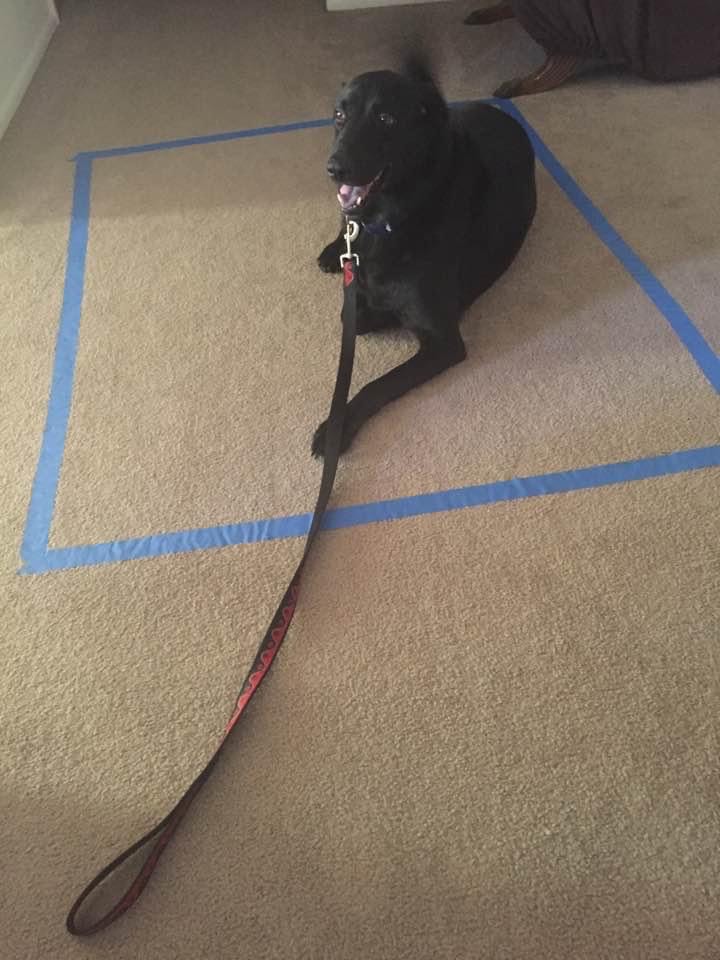
So, disappointed, we went home (well, I was disappointed). The next testing day was coming up in about a month so I was determined we would pass that time! I went home, got out the painter’s tape, and put a blue box on the floor of the dining room. We practiced regularly for the next month. Beau got used to not moving. I had friends “test” him… people that he knew… and he was a good boy and stayed put. When the testing day arrived, we PASSED with flying colors!
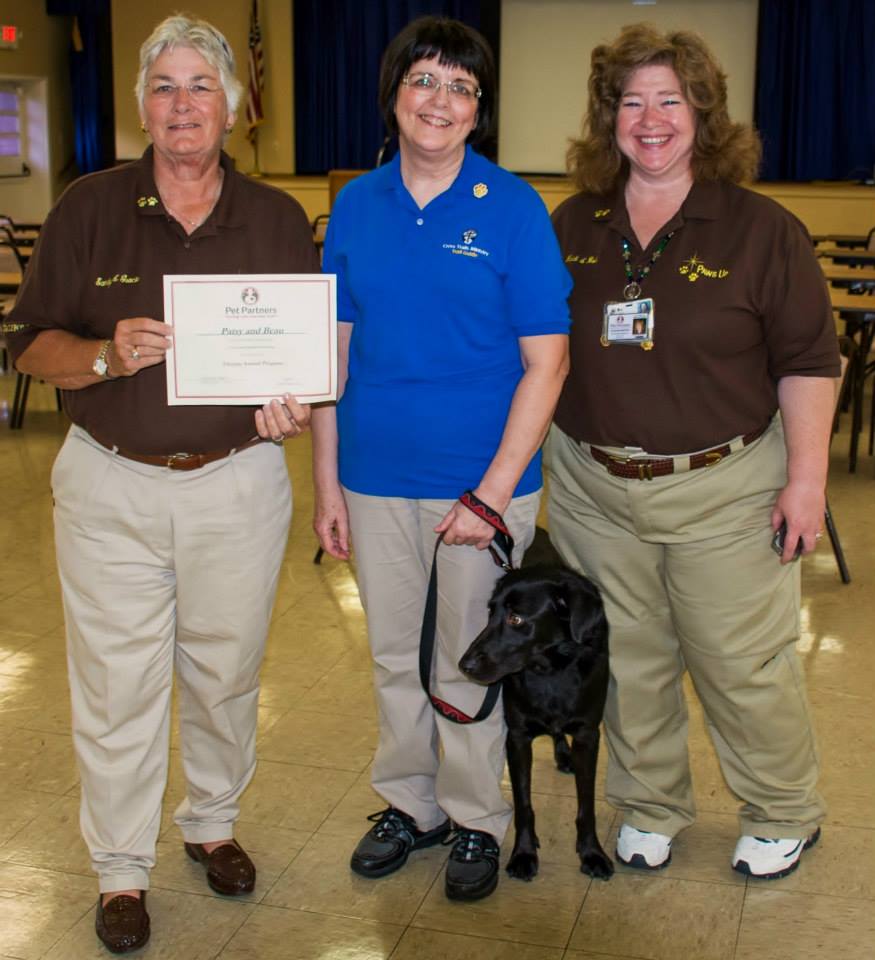
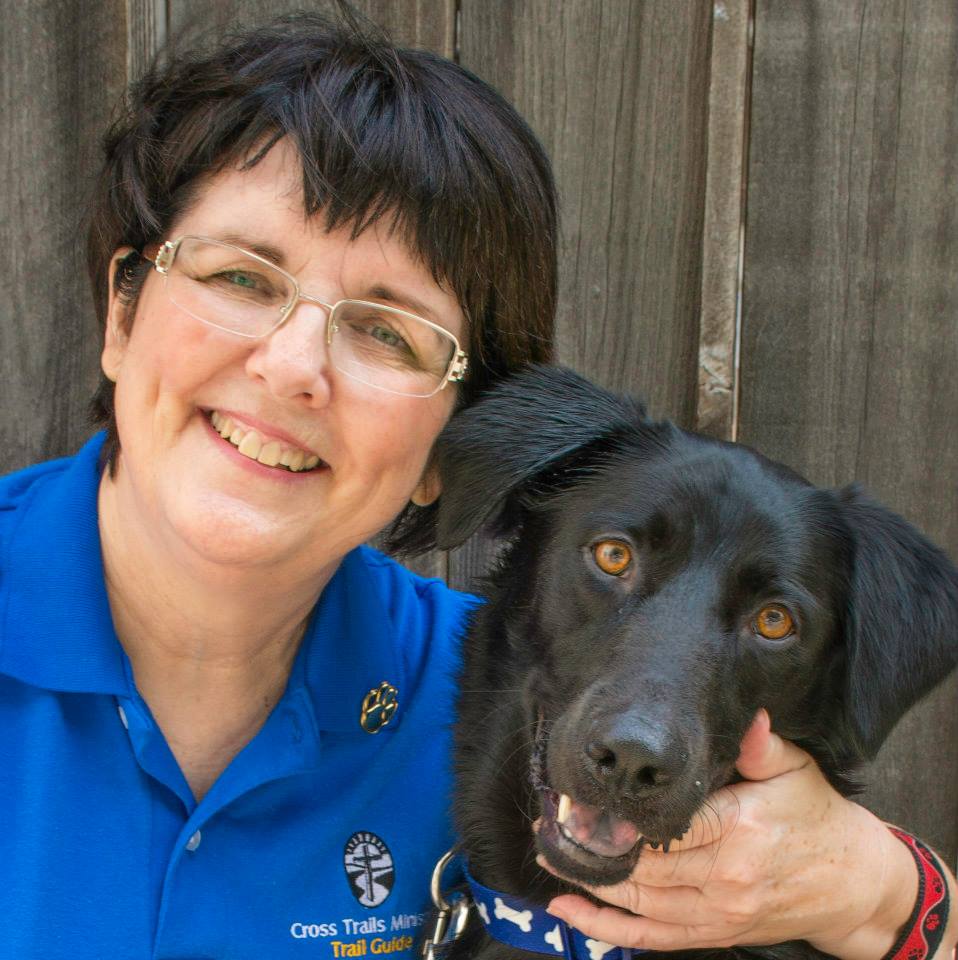

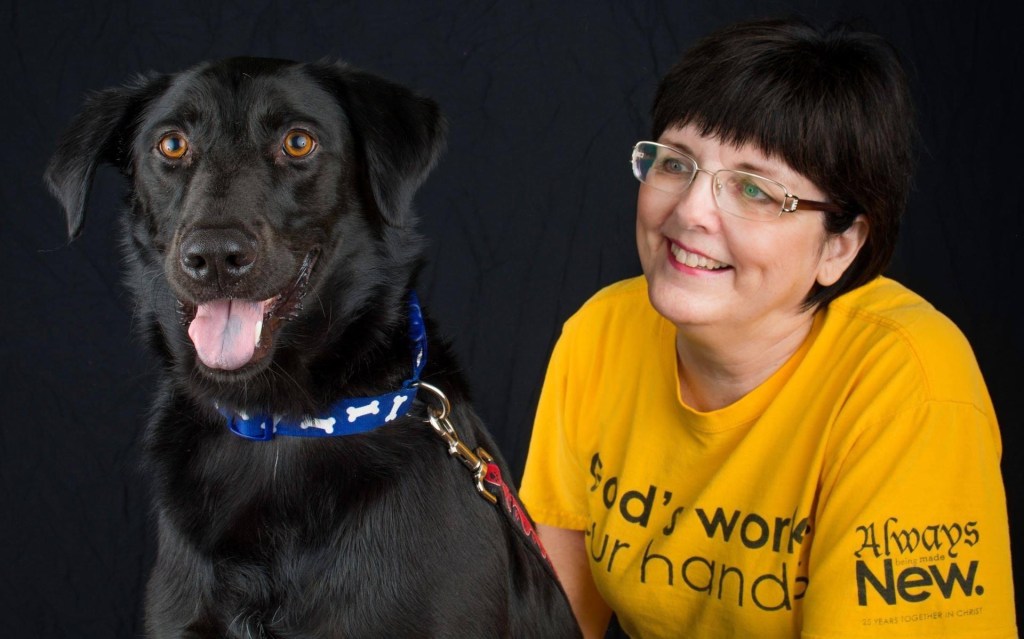
It was worth all the hard work. It was even worth the extra work to make sure we passed the second time. This was a dream come true for me. For the next 5 years, we shared the love with many people, traveled all over the US by car, and Beau built up quite a fan club.
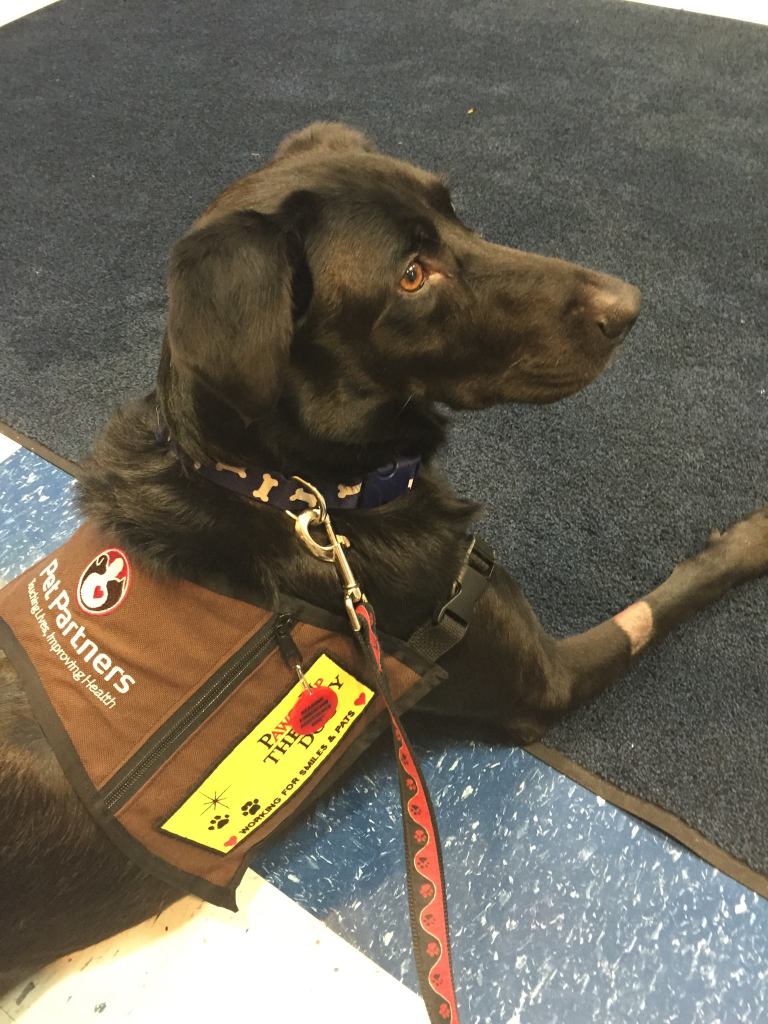
Once we were a registered Therapy Dog team, Beau was then able to become a R.E.A.D. dog. In this program, we went to an elementary school where 3rd grade students were way behind in their reading skills. Some skills were as low as Kindergarten. Two or three Therapy Dog/R.E.A.D. teams at a time would come to the school, and go into a small room beside the library. The librarian would call the kids from their class, and they sat on a blanket next to the dogs and read them a story. Sometimes the dogs would lay their heads on the child’s lap. Sometimes the kids would pet the dogs and talk to them. This program has an excellent record, as the librarians documented swift improvement in reading skills for all of the kids participating. Dogs are non-judgmental and the trained dogs are good listeners. This is one of the favorite activities we did as a team, because Beau LOVED children!
Our story will continue next time as I talk about some of our experiences. Thanks for coming this far with us. If you have ever loved and lost a beloved dog or pet, you will understand the joy and sadness that comes with it.
 Grace Notes
It’s wonderful to hear about Beau’s journey to become a Therapy Dog! It’s clear that you put a lot of time and effort into training him, and the results were amazing. Beau’s temperament test sounds like it went incredibly well, and it’s great that you found a local Pet Partner’s chapter to help guide you along the way. Thank you for sharing your story, and for making a difference in people’s lives through therapy dog work.
LikeLiked by 1 person
Thank you. I just rescued another puppy. Not sure yet if she will be a good therapy dog but I’m going to train her anyway. I will start sharing our story together soon on this blog.
LikeLike
It’s inspiring to read about your journey with Beau and how you trained him to become a Therapy Dog. It’s great to see people dedicating their time and energy to making a positive impact on the world through their pets. Thank you for sharing your experience and the information about Pet Partner’s chapter.
LikeLike